
Genesis GV70 vs GV80: Which Luxury SUV Size Is Right for You?
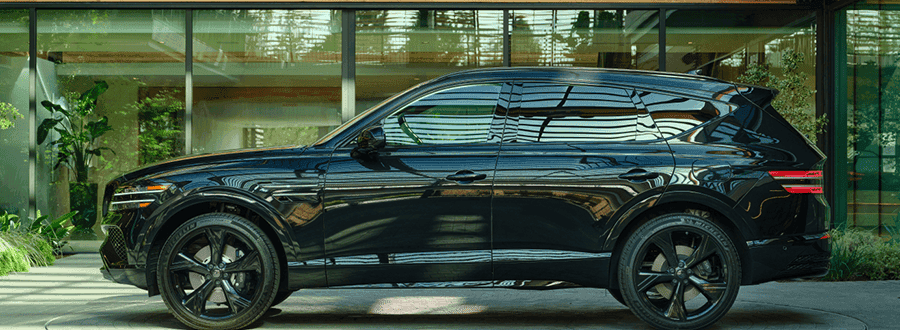
The primary difference between the Genesis GV70 and Genesis GV80 is vehicle size, seating capacity, and utility footprint. The Genesis GV70 is an agile compact luxury SUV designed exclusively for five passengers, while the larger Genesis GV80 is a midsize luxury SUV that offers standard five-passenger seating alongside an available three-row configuration for up to seven passengers. Both vehicles share refined turbocharged engines, standard all-wheel drive, and high-end digital cabin technology, but the GV80 delivers significantly more cargo volume, higher towing capabilities, and broader interior space.
Choosing the right size depends on daily passenger requirements, cargo demands, and driving preference. The compact GV70 measures about 186 inches in overall length with a 113-inch wheelbase, making it remarkably nimble for urban parking and tight maneuvering. In comparison, the midsize GV80 spans nearly 195 inches in length across a 116-inch wheelbase, creating a broader, more commanding road presence with enhanced high-speed composure.
Inside the cabin, both models showcase premium materials, knurled glass switchgear, and the sweeping 27.0-inch OLED display that unifies the gauge cluster and infotainment interface into a single screen. However, the GV80 expands second-row legroom and shoulder room while offering up to 84 cubic feet of maximum cargo capability compared to 57 cubic feet in the GV70.
For buyers evaluating these two luxury crossovers, our team at Delray Genesis provides complete model walkarounds and head-to-head test drives at our showroom location on Ne 6th Ave. You can also contact our specialists by giving us a quick call at (561) 265-0000 to check current vehicle availability and expected arrival schedules.
What are the exterior dimension differences and passenger legroom between the Genesis GV70 and GV80?
The Genesis GV80 is roughly 9 inches longer, 3 inches wider, and 3 inches taller than the Genesis GV70, translating directly into greater interior shoulder room and 1.5 inches of additional second-row legroom. Front-row occupants enjoy nearly identical space in both models, with front legroom measuring approximately 41 inches in both the GV70 and GV80.
Exterior dimensions define how each vehicle interacts with garage spaces, tight parking corridors, and highway traffic. The Genesis GV70 features a compact profile measuring 186 inches long, 75 inches wide, and 64 inches tall, allowing it to navigate crowded coastal avenues effortlessly. The Genesis GV80 stretches to 195 inches in length, 78 inches in width, and 68 inches in height, giving it a substantive footprint that enhances stability during extended highway cruising.
Passenger space metrics highlight subtle structural shifts between the two cabins:
- Genesis GV70 Front Space: Offers 41 inches of legroom and 40 inches of headroom.
- Genesis GV80 Front Space: Offers 42 inches of legroom and 40 inches of headroom.
- Genesis GV70 Second Row: Provides 37 inches of legroom and standard seating for three passengers.
- Genesis GV80 Second Row: Delivers nearly 39 inches of legroom with wider shoulder support and power-reclining seat options.
Rear seat passengers notice the GV80’s additional width and legroom most during extended road trips. However, the GV70 maintains excellent comfort for adult passengers in the second row, making its compact dimensions highly efficient. Shoppers seeking pure electric capability in a compact frame can also explore new Genesis Electrified GV70 models available through our team.
How much cargo space does the Genesis GV80 have compared to the GV70 for luggage and golf bags?
The Genesis GV80 provides up to 39 cubic feet of cargo capacity behind its second row and 84 cubic feet total with rear seats folded, compared to 29 cubic feet behind the second row and 57 cubic feet maximum in the Genesis GV70. This difference gives the GV80 nearly 10 extra cubic feet of trunk space during standard five-passenger operation.
Practical cargo layout dictates how easily each SUV handles daily luggage, sports equipment, and weekend gear. The GV70 cargo floor measures wide enough to store up to four standard carry-on suitcases or two full-size golf bags widthwise without adjusting the second-row seats. In contrast, the midsize GV80 easily accommodates up to six full suitcases or three golf travel cases behind the second row, making it ideal for frequent road trips or country club outings around Boca Raton.
When local shoppers compare the GV70 and GV80 on our sales floor, the first detail they test is whether full-size golf bags fit flat across the cargo floor without dropping the second-row seats. Both crossovers feature a low liftover height and power hands free smart liftgates, but the extra width in the GV80 creates an effortless loading area for bulky, rigid gear.
For buyers considering pre-owned options across both luxury size classes, browsing our pre-owned vehicle inventory reveals a wide selection of thoroughly inspected models ready for immediate delivery.
Does the Genesis GV70 or GV80 offer third-row seating and child safety seat support?
The Genesis GV80 offers an optional third-row seat on select trim levels to accommodate up to seven passengers, whereas the Genesis GV70 is strictly a two-row, five-passenger crossover. Both models feature complete LATCH child safety seat anchors in the outer second-row positions, but third-row seating in the GV80 is designed primarily for occasional use by children or younger teens.
Family seating versatility is a major deciding factor between midsize and compact crossovers. In two-row versions of the GV80 and all GV70 models, installing rear-facing child safety seats in the second row leaves generous legroom for front occupants. Access to the LATCH anchors is straightforward in both cabins, with clearly marked attachment points built into the seat seams.
In seven-passenger GV80 models, accessing the third row is simplified by a one-touch power-folding second-row mechanism. Key family considerations for the GV80 third row include:
- Third-Row Child Seats: Top tether anchors are built into the third-row seatbacks, though lower LATCH anchors are concentrated in the second row.
- Third-Row Comfort: Legroom in the third row is best reserved for shorter trips or young children rather than full-sized adults.
- Cargo with Third Row Raised: Operating the GV80 with all three rows upright reduces rear cargo volume to approximately 12 cubic feet, ideal for soft gym bags or grocery totes.
Parents prioritizing maximum child seat spacing and flexible passenger arrangements often find the midsize package a better long-term fit. Buyers wanting extended manufacturer protection on previous model years can inspect our certified pre-owned Genesis lineup to find factory-warranted SUVs.
What engine options, ride quality, and towing specs differentiate the GV70 and GV80?
The Genesis GV80 achieves a maximum towing capacity of 6,000 pounds when properly equipped, while the Genesis GV70 tops out at 3,500 pounds of towing capacity. Both luxury crossovers offer the same core powertrains—a standard 300-hp 2.5-liter turbocharged four-cylinder and an available 375-hp 3.5-liter twin-turbocharged V6—paired with an eight-speed automatic and standard all-wheel drive.
Despite sharing powertrain architecture, the driving personality of each SUV is distinct. The lighter GV70 delivers agile, responsive handling with sharper steering response through corners, appealing to drivers who prefer a sporty driving feel. Fuel economy for the GV70 2.5T is EPA-estimated at 20 mpg city / 28 mpg highway, while the 3.5T twin-turbo V6 delivers 18 mpg city / 25 mpg highway.
The GV80 prioritizes a smooth, whisper-quiet highway ride supported by an available electronically controlled suspension that uses a forward-facing camera to preview road imperfections and adjust damping in real time. Due to its larger mass, the GV80 2.5T earns EPA estimates of 20 mpg city / 26 mpg highway, while the GV80 3.5T achieves 17 mpg city / 22 mpg highway.
Vehicle capability highlights include:
- GV70 Maximum Towing: Up to 3,500 pounds with standard trailer hitch equipment, ideal for small jet skis or utility trailers.
- GV80 Maximum Towing: Up to 6,000 pounds when properly equipped, capable of pulling midsize boats, camper trailers, or horse trailers.
- Safety Accolades: In official safety evaluations, the Insurance Institute for Highway Safety awarded recent model year GV70 and GV80 models its prestigious TOP SAFETY PICK+ designation. Furthermore, J.D. Power’s 2026 U.S. Initial Quality Study ranked Genesis second overall among all premium automotive brands.
Drivers planning to transition from an existing vehicle into a new luxury crossover can easily appraise and value your trade-in online to establish clear equity toward a purchase.
What is the price difference between the Genesis GV70 and the Genesis GV80?
The starting price difference between the Genesis GV70 and Genesis GV80 is approximately $8,000 to $10,000 when comparing baseline trims, with the compact GV70 starting around $50,000 and the midsize GV80 starting near $59,000–$60,000. Fully equipped top-tier V6 variants reach over $72,000 for the GV70 Sport Prestige and upwards of $84,000 for the GV80 3.5T Prestige Black.
Pricing across both lineups reflects equipment levels, engine selections, and interior luxury treatments:
- Genesis GV70 2.5T Trim Spectrum: Ranges from standard entry models near $50,000 to the Select, Advanced, and feature-packed Sport Prestige around $61,000.
- Genesis GV70 3.5T Sport Lineup: Begins with the Sport Advanced near $66,000 and tops out at $72,500 with upgraded Nappa leather and carbon-fiber interior accents.
- Genesis GV80 2.5T Range: Starts around $59,000–$60,000 for base and Select configurations, moving up to the Advanced and Prestige trims near $73,000.
- Genesis GV80 3.5T Range: Ranges from $75,000 for the 3.5T Advanced up to $84,000+ for executive-level Prestige and Prestige Black editions.
Both models come protected by an industry-leading warranty package, including a 5-year/60,000-mile basic warranty, a 10-year/100,000-mile powertrain warranty, and 3 years or 36,000 miles of complimentary scheduled maintenance. To explore monthly payment structures and term options, submit a customized financing application through our finance department.
Common Questions About the Genesis GV70 vs GV80 Size Comparison
Q: Is the Genesis GV80 significantly harder to park than the Genesis GV70?
Standard parking spaces and home garages often challenge the larger dimensions of the Genesis GV80, which measures about 9 inches longer and 3 inches wider than the GV70. However, both SUVs feature advanced parking technology, including front and rear parking sensors, a 360-degree surround-view monitor, and available Remote Smart Parking Assist, which allows the vehicle to maneuver into perpendicular or parallel spots automatically while the driver stands outside.
Q: Can full-size adults comfortably sit in the second row of the Genesis GV70?
Yes, adults can sit comfortably in the second row of the Genesis GV70 during everyday driving and highway trips. The GV70 provides 37 inches of rear legroom and generous headroom. Taller passengers over 6 feet 2 inches will appreciate the extra 1.5 inches of legroom and broader shoulder space offered in the midsize Genesis GV80 second row.
Q: Does the Genesis GV70 require premium fuel for its turbocharged engines?
Genesis recommends premium unleaded gasoline for both the 2.5-liter turbocharged four-cylinder and 3.5-liter twin-turbocharged V6 engines in the GV70 and GV80 to achieve their full factory horsepower and torque ratings (300 hp and 375 hp, respectively). Using lower-octane fuel is permissible when necessary, but engine management software will automatically adjust timing, resulting in slightly reduced peak performance.
Q: Are the safety technology suites identical between the GV70 and GV80?
Both crossovers come standard with comprehensive driver-assistance systems, including automated emergency braking with pedestrian detection, lane-keeping assist, blind-spot collision avoidance, and adaptive cruise control. Higher trims on both the GV70 and GV80 add Highway Driving Assist with automatic lane-change capability, side collision-avoidance sensors, and hands-on wheel detection.
Q: Which model offers a smoother, quieter ride for highway commutes?
While the GV70 provides a firm, athletic ride tuned for precise driver feedback, the Genesis GV80 is engineered specifically for maximum isolation and road compliance. The GV80 features thicker dual-pane acoustic glass, active noise cancellation, and an available Electronically Controlled Suspension with Road Preview that scans the road ahead to soften dampening forces over bumps.
Prices and MSRP referenced in this article are estimates for informational purposes only and do not constitute an offer to sell. See dealer for complete details.
Fuel economy estimates shown may differ from official EPA ratings and should not be relied upon as a guarantee of actual vehicle performance.
0 comment(s) so far on Genesis GV70 vs GV80: Which Luxury SUV Size Is Right for You?